
Jim
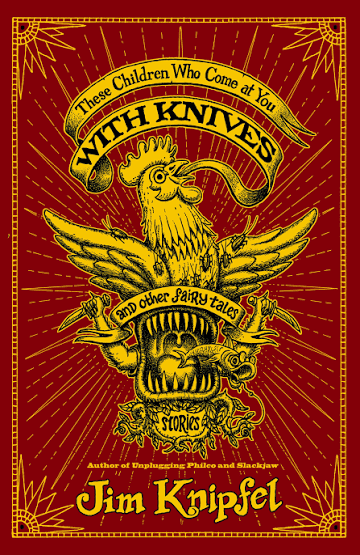
It’s weird to sit down and write about somebody but the only one I really want to read it is the person I’m writing about. And he just isn’t available.
A bit of context. We’ll go back a ways, forty years and a bit, 1986, probably late spring. I got a call from Toni at the front desk of the Welcomat in Philly that somebody was asking about writing for us.
The Welco was an “alternative weekly” that was more actually alternative, really its own thing, more the kind of freelance essay collection that might have come out of Weimar Germany in the 1920s. I was arts editor, working under Dan Rottenberg, who had conceived this fairly unique beast. I was looking for writers, yes, but those who had presented themselves up those stairs for the most part shouldn’t have.
Our wee editorial staff was on the third floor of a skinny row house on the 1900 block of Ludlow Street. Up the stairs that emptied away from me appeared a black fedora. A hand swung around the stair post and facing me was a guy of youngish but indeterminate age, attired in a long black coat, black pants, and that black hat that covered dark hair. His face was long, sharp, and … imposed upon?
That image has been in my head throughout the forty years he and I were in daily conversation, first in that office, then by phone, then by morning email.
Thus was the beginning of Jim Knipfel, the writer.
Without much examination—because he had no clippings to show me—twenty-one years old, a native of Wisconsin and schooled at U. Madison and U. Chicago, I on some inspiration sent him out to cover odd events, including artist openings.
Now, Jim’s eyesight was lousy then, part of the slow progress (regress) of retinitis pigmentosa, a winding down of the retina that finally leads to total blindness. What Jim wrote up for those exhibits was the best visual arts coverage I ever ran. No gabble about trends or art criticism or movements or fucking Warhol, just what he saw in front of him and what that said about the artist as a living being.
Jim had also watched every known horror film, listened to and talked with every known punk or uber-punk band. I knew little of either category but nodded as if. Later, we listened to Killdozer at the Khyber Pass on 2nd Street, still the only band that always, always makes me laugh like a fiend, no matter my mood.
Still, I was a little slow in doing the obvious: giving him his own weekly column. “Slackjaw” started late August or early September ’86, near as I can recall. It ran for the next six years, while he was with the Welco, both in the Philly office and the first couple years after he moved to NYC in 1990.
That column was the impetus that led to a freelance career and nine volumes of fiction and nonfiction, eight of them on a shelf next to my woodstove; one, a shorty about the Godzilla films, on my iMac. (If anyone can point me to anything I’ve somehow missed, let me know, right now.) Along the following years he spent well over a decade at the New York Press, the NYC weekly closest in outlook to the Welco in Philly. At one point, he was voted best columnist in New York City.
I think I’m a pretty good writer of snarky, underhanded, bitchy, negativistic prose. Jim could write circles around me. He never threw verbal spitballs that weren’t deserved, but once launched they landed with a near audible splat.
Some things you just can’t explain and shouldn’t try to. Somehow our daily email exchanges built on each other, beyond just shared agreement. We were tapped into an unlikely likelihood. Yet the couple times we tried to collaborate, first on an article, then on a book idea, they didn’t work. Looking back, I think it proved that we were real people.
But this isn’t, really, about Jim the writer. It’s about one of the most admirable people I can imagine. He lived by and for the truth as he saw it, getting himself in regular trouble over where the truth led.
Jim’s eyesight went, and went, and went, until it was gone. But his white cane grew as a source of humor and absurdity: What the hell, if you’re going down the tubes, go with the flow. But the rest of his body started to follow, until he died—two days back, the seventh of October, as I write this.
Jim Knipfel dead? Impossible! Such things don’t happen in this … world? Yes, they do, and today’s vicious world relishes death.
He and I almost never talked about death, because neither of us had time for the holy hooha of god or religion. When you’re dead, you’re gone, there’s no more you, no spiritual leftover and—let us hope—no heaven.
But though we shared a pretty low opinion of the human beast, Jim was well ahead of me in friendship. He had friends across the country and the world. Me? I care about few people outside my wife and kids. On the grand scale, his was my only ongoing, continuing friendship that counted, and this is a far milder expression than what I feel.
Now he’s dead and is no more. Except the part of him that lives in me.
So no goodbye, Jim, there you are!
by Derek Davis