
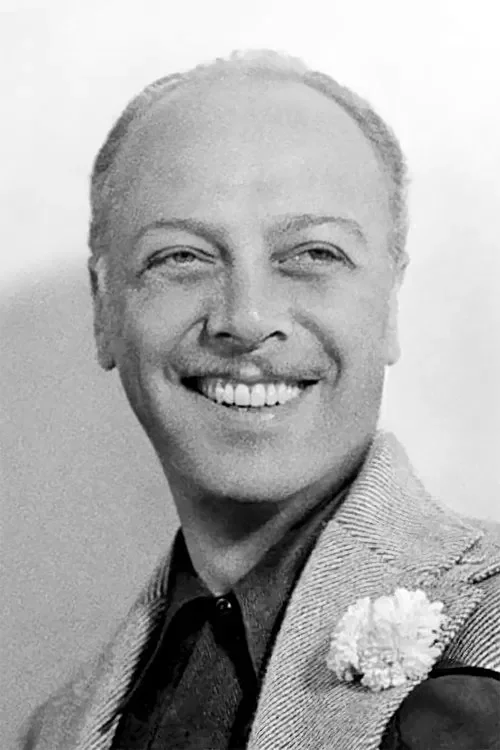
Mitchell Leisen was a major American film director. He belongs in the first rank, not the second tier, where he has often been placed by those who value the scripts he was given by Preston Sturges and Billy Wilder and Charles Brackett more than what he actually did with those scripts. Leisen’s name was usually written in sloping cursive in his opening credits, and that set the mood for what he had to offer. His was a gentle style, a deliberately unobtrusive style, smooth and gliding, attentive to nuances, visual and emotional.
Leisen made a point of nearly always moving the camera only when it is following a character who is moving right along with it, and the edits in his movies are as invisible as possible. He made three films that are undisputed classics: Easy Living (1937), written by Sturges, Midnight (1939), written by Wilder and Brackett, and Remember the Night (1939), written by Sturges. All three of these classic Leisen movies are partly about pretending to be something you’re not in order to move up or over into another social atmosphere or class and take on a new identity, and this theme is something that always interested Leisen particularly.
He got his start making costumes and dressing sets for Cecil B. DeMille, and he also made costumes for Mary Pickford and Douglas Fairbanks. That training shows through in his later work, that sense of fantasy and beauty for its own sake. Leisen had a fetish for absolute authenticity when he did period pictures, and he took this fetish to nearly Erich Von Stroheim lengths if he had the money to spend. Remember the peacock headdress that he designed for Gloria Swanson in DeMille’s Male and Female (1919), or the sexy harem pants he put on Fairbanks for The Thief of Bagdad (1924), or the barely-there garments he designed for Claudette Colbert in The Sign of the Cross (1932) and you can get a first sense of Leisen’s aesthetic: hopeful, fantastical, erotic. And he was a pretender himself on some of these early movies because he was very skillful at making sets and crowd scenes look more opulent than they actually were given some of the budgets he had to work with.
He took the reins from nominal director Stuart Walker for two films that proved his range: Tonight Is Ours (1933), a high comedy that begins with a sexy masked ball, and The Eagle and the Hawk (1933), as grim and concentrated an anti-war film as you will find from this era. Leisen next graduated to prestige pictures like Cradle Song (1933) and Death Takes a Holiday (1934), with its high-flown Maxwell Anderson script. Leisen was fond of Death Takes a Holiday all his life, and he even wanted to re-make it in the late 1940s, but it has not held up as well as some of his lesser-known pictures from the 1930s.
After Murder at the Vanities (1934), a backstage movie with some odd musical numbers, Leisen took flight with three pictures that demonstrated the full scope of his talent. What makes a really great director, a major director? The ability to take a poor script, like the one Leisen was given for Behold My Wife! (1934), and make it into something that moves like a dream and seems inevitable. While you watch Behold My Wife!, there is a double consciousness of how outlandish and slapdash the plot and dialogue are and how Leisen transcends this through pacing, framing, and staging, so that there is always something to delight the eye. Leisen movies generally have a difficult-to-describe kind of creamy look, as if every person and table and chair were covered in the same sort of protective satin sheen.
He used a similarly fast, super-controlled pace for Four Hours to Kill! (1935), another backstage movie where Leisen himself plays the orchestra leader but you never see the numbers on stage. A kind of musical proto-noir, this movie depends on Richard Barthelmess, who is playing a criminal waiting to be taken to jail, and Leisen is alert to Barthelmess’s needs and sensitive to his big scene, where his character talks about his unhappy past. And then Leisen was given a script (by Norman Krasna) and two stars, Carole Lombard and Fred MacMurray, that were particularly congenial to his style, and the result was his first classic, Hands Across the Table (1935), a rather anguished comedy about love and the urge for security. Leisen had mastered form, and now he mastered the content that interested him, good-bad people navigating their own wants and desires and what they will do for them. For Leisen, mixed emotions are really the only emotions possible.
In all of his most characteristic films, Leisen’s characters are at a crisis point and need to decide to take a chance and see what they can get away with to become another version of themselves. There is lots of comedy in a situation like this, of course, but Leisen always hints at the dark underside of pretending. There is an American urge in these pictures that says, “What I say I am is what I am,” and that urge is usually naïve (think of early Joan Crawford heroines). Leisen looks at this urge from a height of sophistication, almost always warmly and tenderly, but sometimes he lets a really grim insight slip through. Think of Carole Lombard’s anti-social asides in Hands Across the Table, or that harrowing scene where Barbara Stanwyck goes home to her grudge-holding and cruelly puritanical mother in Remember the Night and you will feel the hurt that animates Leisen’s search for a created world of his own.
In many ways, the 1930s were Leisen’s best creative period, where he turned out beautifully balanced and finished entertainments like 13 Hours by Air (1936). He was a romantic who had a special way of visually enfolding the lovers in his movies that is almost Frank Borzage-like, and he glorifies very different women in what must be the best close-ups of their careers: look at some of the close-ups of the melancholy Sylvia Sidney in Behold My Wife! and then look at the close-ups of the wised-up Joan Bennett in 13 Hours by Air and see how Leisen gives them the same glamorizing treatment without ever losing what makes them so individual. Even pure assignments like Artists and Models Abroad (1938) glow with a kind of dreamlike assurance, as if to say, “Why shouldn’t a comedy look beautiful?”
And when Leisen had a meatier script, like Swing High, Swing Low (1937), which also starred Lombard and MacMurray, he was capable of virtuoso work that blended comedy and drama so seamlessly that it’s difficult to tell where one leaves off and the other begins. He did some Sturges-like slapstick for Easy Living, including the famous automat scene where the windows fly open and everybody grabs at the food, which was his idea. But for Remember the Night, Leisen pared down the Sturges script, cutting unnecessary scenes and verbose dialogue until he had what he wanted, a portrait of a hard-boiled woman who starts to long for the warmth of a “why not?” idealized mid-West home. Remember the Night is probably Leisen’s finest film, and a peak in his career, a comedy-drama or a dramatic comedy all whipped together until the consistency is exquisite and just right.
After the very sensitive Hold Back the Dawn (1941), a Wilder-Brackett script about a hard-boiled male gigolo (Charles Boyer) pretending to love a sheltered, repressed girl (Olivia de Havilland) until his feelings actually become genuine, Leisen’s career settled in for a few years to minor comedies, as if wartime austerity had affected his budgets, his scripts, and his imagination. In 1944, he did two movies in color, Lady in the Dark and Frenchman’s Creek, one anti-feminist and one feminist, and both rather nightmarishly disconnected and self-indulgent.
Leisen was going through a crisis in his personal life by the mid-1940s, and it showed in his work. He was mainly gay, but he didn’t want to be, and so he had married a fledgling opera singer (“a horror” according to the sharp-tongued Ray Milland) and he was carrying on a tortured affair with costumer Natalie Visart while also pursuing men. Leisen’s loyal secretary Eleanor Broder told David Chierichetti, the author of the definitive Leisen book, Mitchell Leisen: Hollywood Director, that her boss tried taking hormone shots at one point because he thought they might eradicate his homosexuality, but of course that didn’t work. Leisen lived with the pilot Eddie Anderson in the late 1930s, and Anderson left him for Shirley Ross, the actress who talk-sings “Thanks for the Memory” with Bob Hope in The Big Broadcast of 1938, an unusually sentimental scene within his work that Leisen insisted on. When that picture finished, he had a heart attack, and his health was never quite the same afterwards.
In the 1940s, after Visart had gotten pregnant with his child and lost it, Leisen took up with the dancer Billy Daniels, and his unhappiness grew. Daniels dances in what has to be Leisen’s worst feature, Masquerade in Mexico (1945), a semi-remake of Midnight that is so distracted and poorly timed that it would seem to give credence to Billy Wilder’s many complaints about Leisen over the years in interviews; if you were to watch Masquerade in Mexico right after Midnight, it would seem like a mark against Leisen as an artist in his own right rather than a servant of superior scripts where he could get them. Daniels is actually the only thing this movie has going for it: he’s an exciting dancer, and an intriguing screen presence, sexy, petulant, a little dangerous. Many in Leisen’s inner circle disliked Daniels, but maybe Masquerade in Mexico might work if it could just be Daniels dancing as Leisen watches.
The blandness of the décor in something like Suddenly It’s Spring (1947) is a real comedown from his Art Deco 1930s pictures, but Leisen rallied in this period with some of his best and most personal films, starting with Kitty (1945), a sumptuous Gainsborough period piece with all the trimmings and a Pygmalion subject that activates all of Leisen’s interest in pretending and “passing” as something you are not. Best of all from this time is Song of Surrender (1949), an uncommonly severe movie about a New England girl named Abigail (Wanda Hendrix) who finds a way out of her repressive environment by listening to music. What Abigail feels in Song of Surrender is surely what Leisen himself must have often felt as a young man growing up in the mid-West at the turn of the last century, and so this picture, which he said he didn’t much like, is his secret movie, his confession movie. It’s a great film, daringly stark and stripped-down, and it is as unerringly paced and controlled as all of his best 1930s work; there are moments when it feels like a precursor to Jane Campion’s The Piano (1993) in its insistence on the will power needed for a woman to find aesthetic and sexual fulfillment.
Leisen did an intriguing noir with Stanwyck called No Man of Her Own (1950) and an overlooked, charming adaptation of J. M. Barrie called Darling, How Could You! (1951), which is filled with longing for family life that Leisen certainly knows is a fantasy like any of his others. (How poignant it is when Joan Fontaine says in that movie that if her children are going to love her they mustn’t “think me over first.”) He spent twenty years working at Paramount Studios, and he was a creature of the studio system; when the studio system went, so did he, but not before one more diverting small musical, The Girl Most Likely (1958), which was the last feature made at RKO. “When the studio decided we no longer needed a certain department, it was shut down and if we needed something after that, we had to make do ourselves,” Leisen said. “It was really eerie.”
Ill-health and an unwarranted reputation for spending too much money kept Leisen mainly working for TV in his last years, so that he was back to low budgets and bringing in his own furniture to dress his sets. He had been fired from Bedevilled (1955) for hitting on one of the straight actors he was working with (the actor complained to MGM), and this put another shadow over his reputation. He had made Fred MacMurray’s career, but when he tried to get work as a director on MacMurray’s hit TV show My Three Sons, it was no go. “He sent me a telegram asking for the job,” MacMurray said. “He was, well, you know, a homosexual and he had gotten into some trouble on a picture he was making in Europe. With the three young boys we had working on the show, I just didn’t think it was right. So I never answered the telegram.”
It was his women who stayed loyal to Leisen in his final years, both his secretary Broder (who was a lesbian), and his old lover Natalie Visart, who had never really gotten over her love for him and came to stay with him toward the end (Visart’s son Peter was killed in a gay-bashing in the 1970s). Leisen’s responses to David Chierichetti’s questions in their interview book are unfailingly candid, insightful, and juicy, but his standing has never ascended to the level of that of Preston Sturges or Billy Wilder, even though his visual style was far more developed than theirs, and his point of view arguably more sophisticated and certainly more kind-hearted. He was a romantic with an edge of disquiet, and this made for matchlessly rich pictures, pulsing with hope and with pain.
Leisen knew about all aspects of picture making, and he has the requisite number of classics for entrance to the pantheon, plus a whole slew of other pictures of interest. He made Remember the Night and Song of Surrender. He made Midnight and Kitty. And he made Easy Living and Darling, How Could You! Those are all heights, and from different periods, and they prove the consistency of his inventiveness and the distinctiveness of his talent. His creativity came out of personal unhappiness on the one hand and unprecedented creative license and support under the old Hollywood studio system on the other. We will not see that particular combination again.
by Dan Callahan