


Philip Wylie: The Gore Vidal of the 1940s
You don’t often hear people referencing Philip Wylie these days, but from the late Twenties through the late Sixties, he was one of the most popular, prolific, influential and at times controversial writers in America. Wylie not only wrote novels, short stories, and articles for everything from the Saturday Evening Post and Popular Mechanics to Harper’s and academic journals, but newspaper columns and screenplays as well. Part of the problem, why he’s so thoroughly forgotten today, may be that even in his lifetime, as ubiquitous as he was, he was almost impossible to pin down. In many ways, he was reminiscent of Gore Vidal, and it’s entirely likely, and for the same reasons, Gore Vidal will be just as sadly forgotten forty years from now.
The son of a Presbyterian minister, Wylie grew up in Montclair, New Jersey and graduated from Princeton in 1923. He began writing science fiction and mystery stories for the pulps, and his 1930 novel Gladiator has long been rumored to have been the central influence on the creation of Superman. Other stories and novels were said to have inspired Flash Gordon and Doc Savage. In the early Thirties he also began writing screenplays, working on both Island of Lost Souls and James Whale’s The Invisible Man. But Wylie was a polymath with a solid working knowledge of psychology, biology, physics, anthropology, sociology and engineering, elements of which would work their way into not only his science fiction, but his social criticism, his writings on policy issues, even articles about deep sea fishing and gardening. A 1952 article on growing orchids led to a nationwide gardening fad. He wrote cleverly and thoughtfully about gender issues, and though grossly misinterpreted at the time as a misogynist, Wylie, as a male writer, was actually decades ahead of his time. He wrote about UFOs and education. He railed against censorship of any kind. He touted the importance of civil defense preparedness years before backyard fallout shelters or duck and cover drills came into vogue. His incredibly popular “Crunch & Des” stories, about the adventures of a charter fishing boat captain in the Gulf of Mexico, resulted in a short-lived 1955 television series starring Forrest Tucker, and his 1933 novel When Worlds Collide was adapted into George Pal’s 1951 apocalyptic sci-fi epic.
His 1945 speculative short story “The Paradise Crater” envisioned the Nazis using Uranium 237 to develop an atomic bomb. Problem was, the Manhattan Project was still underway, the first atomic test was still a few months down the pike, and no one was supposed to know anything about Uranium isotopes, let alone their role in the development of nuclear weapons. As a result, Wylie found himself placed under house arrest until it could be determined he wasn’t a spy. Ironically, his continued interest in the science and sociology of nuclear war (it would be at the heart of several novels and countless non-fiction essays) earned him a job as an advisor to the precursor of the Atomic Energy Commission.

An Interview with Screenwriter Louisa Rose
In 1973, Brian De Palma released Sisters, his Siamese twin mystery thriller starring Margot Kidder and Charles Durning. After a string of social satires which, to be honest, haven’t aged very well, Sisters was De Palma’s breakthrough film, the one that would cement the form and style for which he’d come to be known. A year later he released the horror/comedy/glam rock opera Phantom of the Paradise starring the great Paul Williams. Hitting theaters more than a year before Rocky Horror, Phantom combined elements from Faust, Phantom of the Opera and about a dozen other sources into a bright, fast, wicked comic book satire of the music business. The film went on to become a cult favorite.

The Three Faces of “Miss Lonelyhearts”
Originally published in 1933, Nathanael West's short novel, Miss Lonelyhearts, paints a comically black portrait of the human condition and the world as a whole. A cynical newspaper editor hires an earnest and kind-hearted would-be reporter simply to prove to himself that the kid is as craven and rotten inside as everyone else in this stinking world. Toward this end, he hands the kid the “Miss Lonelyhearts” advice column. The letters from the lost, the crippled, the beaten and forsaken, and the helpless—people looking for some kind of salvation or simple hope—make up the heart of the book, but even beyond the letters, every one of West’s characters is plagued by some deep ugliness. And in those early years of the Great Depression, the world that surrounds them all is no less bleak. The misery runs to such absurd depths, in fact, that sometimes the only thing a reader can do is look on in astonished horror or recognition.
The book didn’t sell very well (perhaps people didn’t need any reminding that we were all fucked), which makes it all the more amazing that the rights to the book would be snatched up by Hollywood and turned into a film not just once, but three times over the next quarter-century.
When 20th Century Fox acquired the rights shortly after the book’s publication, the initial question must have been “how do we present this material to a glum Depression-era audience?” Well, the answer was simple. You hire Lee Tracy, toss the novel out the window, and rewrite it as a frothy screwball comedy. It was the oldest and most beloved of Hollywood’s ways of dealing with literature.
Directed by Alfred L. Werker (a busy contract director since the late ‘20s) and written by Leonard Praskins, Advice to the Lovelorn stars Tracy as Toby Prentiss, an undependable reporter who is punished for missing a big story by being forced to take over the “Miss Lonelyhearts” column. (The name of the column was the only element of West’s novel to survive the adaptation). Prentiss’s attempts to sabotage the humiliating assignment backfires, however, when his unconventional and shocking bits of advice become a big hit and boost the paper’s circulation. The usual predicaments and hijinx ensue, most of them involving his girl Louise (Sally Blane).
A momentary dark turn opens the third act, when Prentiss’s mother dies after he gives her some medicine bought from a crooked druggist he’d been plugging in his column. It’s not long, though, before things turn wacky again and wrap up nicely and neatly and happily.
While it’s understandable why Fox didn’t want to go plumbing the shadowy corners of human misery in 1933, one has to wonder if West was disgusted with what had been done with his novel, or if he was just happy with the check. After all, it was that same year that he signed a contract to be a scriptwriter for Columbia.

Manson in His Own Words
{NOTE: During his lifetime, Charles Manson was rarely allowed to speak on his own terms. At least not without being interrupted, edited, or interpreted in order to leave him sounding like a gibbering hippie lunatic spouting incoherent nonsense. That’s what we do to people whose ideas pose a viable potential threat to the status quo. Before anyone has a chance to hear directly what the likes of Manson or the Unabomber have to say, tell the mob it’s all incoherent gibberish, and no one will pay the slightest attention. Who has the time to waste listening to nonsense from a crazy person? Problem solved.
With the passing of one of the most insightful and important thinkers of the 20th century, a man who had been mythologized nearly out of existence while being touted as the most Evil Bugaboo the World Has Ever Known, we would like to offer him the simple respect of letting him at last speak for himself. Below is the testimony Manson offered in his own defense during the Tate-LaBianca murder trial in 1970. It’s worth noting that the jury was ordered out of the courtroom when he took the stand, and so never heard any of the following.}
There has been a lot of charges and a lot of things said about me and brought against the co-defendants in this case, of which a lot could be cleared up and clarified…
I never went to school, so I never growed up to read and write too good, so I have stayed in jail and I have stayed stupid, and I have stayed a child while I have watched your world grow up, and then I look at the things that you do and I don’t understand…

Richard Shaver in the Underworld
In 1932, Richard Sharpe Shaver was working on the assembly line at a Ford auto plant in Detroit when he began noticing something strange. Every time he picked up his spot welder, he found he could hear the thoughts of the other workers all up and down the line. If that wasn’t odd enough, he also began hearing the anguished screams of what he determined to be people being beaten and tortured in caverns miles beneath the earth’s surface. Shaver concluded that it was the unique configuration of the coils in his spot welder that allowed him to access these thoughts and distant sounds.
Disturbed by this, understandably enough, Shaver soon left his job with Ford. Around this same time, his brother died, a loss which affected him deeply, and he got married and had a baby daughter. Then he vanished for much of the next decade. In that time his wife died and her relatives took custody of his daughter, telling her her father was also dead.

You Can Have it Twice: The Celluloid Jim Thompson
In the 1930s, writers like Dashiel Hammett, Raymond Chandler and James M. Cain made some serious headway toward rehabilitating crime fiction. What had long been dismissed as a gutter genre aimed at lowlifes, the undereducated and the psychically damaged started to be taken more seriously as a legitimate literary form. The success of film adaptations of The Maltese Falcon, The Big Sleep, and The Postman Always Rings Twice only helped matters. With the exception of Cain (who could get pretty nasty), the books themselves remained fairly traditional and straightforward tales of stalwart detectives on the trail of nogoodniks and sinister types. It’s up to the detective to solve a mystery, see that justice is served, and once again re-establish the conventional social order.
When the second generation of American hardboiled fiction began to emerge in the ’40s and ’50s, writers like David Goodis, Charles Willeford, Horace McCoy and Cornell Woolrich more often than not followed Cain’s lead. Reflecting the nation’s postwar ennui and paranoia. Their novels became much darker, more violent, more nihilistic, and deeply disturbed. The new world had grown more openly depraved, and there was no social order left to restore. The focus moved away from do-gooder (if eloquently wisecracking) detectives toward the criminals themselves. It could be argued that the crime pulps of the ’50s effectively undid all those advances in public perception, returning crime fiction to the gutter that spawned it.

The Aristocrats of Film Noir
Film Noir was never fundamentally a genre of shadows, but rather defined itself as a set of underlying attitudes and assumptions — All Talking Pictures were poised, Johnny-on-the-spot, to save the country; or to capture the ensuing madness when the stock market crashed in 1929. Instead of catching the fall of executives throwing themselves out of windows, Noir caught the fall of the masses down below. It’s tempting to posit Black Tuesday as the date of Noir’s metaphysical birth, and to suggest that economic calamity and advancing technology met for preordained reasons. Let us give in to that temptation.
After all, what other apostate canon could possibly have contrived a cinema where raw anger is so central; where, rendered visually, it is the prescription to discard standard canonical shorthand like “genre” or “classic” — spawning instead this previously unknown brood of redheaded stepchildren twisting in the womb of American moviedom? The films themselves cry out for a cinematic death. Pursued through abandoned industrial parks and labyrinthine sewer systems, Noir characters are born tickets punched, fate sealed. The black-listed, and therefore uncredited, Lionel Stander narrates 1961’s Blast of Silence, pronouncing “hate” more times than anyone has counted. Listen for the unmistakable echoes of Stander’s corroded instrument as this, the most prosperous nation of late modernity comes tumbling around us.
Long before the official beginnings of Noir in the Forties, Hollywood thrillers routinely used the visual tropes of dark shadows, low-key lighting, expressionist angles, and featured detectives, gangsters etc. What Noir added was a sense of corruption, of capitalist society gone awry (or, perhaps, working exactly as it was supposed to, to the detriment of honest citizens). Post-WWII, this served as a release of pent-up pressure: criticism of the status quo had been seen as unpatriotic during the war. Suddenly, it was acceptable, even desirable, to turn that righteous anger inward, against domestic problems. Veterans lugged their battlefield violence home with them, an American principle brought to new fruition. Or to quote dirty cop Detective Lieutenant Barney Nolan (Edmond O’Brien) in 1954’s Shield for Murder…

Hooligans
On Wednesday night, November 6, bands of supporters of the Israeli soccer team Maccabi Tel Aviv roamed through Amsterdam, waving national and team colors. Though they were ostensibly there to attend a UEFA Europa League match between Maccabi and Ajax of Amsterdam, they took to the streets and chanted “Death to the Arabs” and “Why are there no schools in Gaza? Because there are no children”, celebrating the slaughter their nations has carried out over the course of nearly fourteen months. They attacked and destroyed a taxi, tore down one Palestinian flag and burned another. In short, they acted as if they were home in Israel where, protected by the police and army, any and every form of racist language and violence is permitted. The display of Palestinian flags is forbidden in Israel, and the fans acted as if Amsterdam was an occupied city and that Israeli mores and laws ruled. They acted like a combination of soccer hooligans and right-wing terrorists. In acting this way, the Israeli fans taunted Amsterdamers, particularly Arab Amsterdamers, and in tense times received the response they should have expected. Was this antisemitic violence or anti-Israeli violence? This is an entirely valid question, since there are no reports of Dutch Jewish citizens or sites being attacked. For Arabs, the enemy had shown its face in their hometown, and that enemy is Israel.

Poe in Cinema/Poe as Cinema
Georges Rivière is haughty. Like he smelled something bad. The script?
Here, in 1964’s Castle of Blood, playing a penurious dandy silly enough to spend the night in a haunted castle on a bet, Rivière seems to think aloofness will be all the protection he needs. It won’t be! Indeed, only one thing can save the film’s leading man from the visual shibboleths of a dying genre, and that’s the cameraman.
Camera artisan Riccardo Pallottini, playing savior and tormentor, coaxes Rivière onward while punishing his progress. Nobody would be more surprised than the late Signore Pallottini himself hearing his cinematography praised as “experimental”. And yet, this is Gothic Horror’s greatest master shot — a case of push and pull, whose tension and elasticity continue to create rebounding space 116 years after its creator’s birth: so praise it I shall.
With ace cameramen, point-of-view becomes a more problematic concept, as when George O'Brien wanders glazed through F.W. Murnau’s swamp in Sunrise. There, the camera sometimes recedes from the hero’s advance, sometimes lets him pass and follows him, then seeming to pass into his head and travel with him, looking out of his eyes — until we're surprised by his re-entry into frame. Whose eyes have we been looking through? While Castle of Blood’s cliches would seem to be the thumpingly obvious point — a door’s creaking swing illuminates a wall bristling with harnesses and cartwheels… zoom in as a black kitten abandons its lair in a piece of spangly lacework… an organ wheezes as the hero’s sputtering candle casts the impossible shadow of itself on the crumbling masonry — those same hackneyed moments synthesize utterly unexpectedly into cinema pur.
It’s as if invisible tendrils were connecting Rivière’s body to Pallottini’s will.

L’affaire Sonia Rozensweig
The year 1933 in France was rank with seamy scandals: les affaires Violette Nozière, Oscar Dufrenne, and Sonia Rozensweig. Each provided rich material for the early 20th century’s forerunner of clickbait, the newspaper fait divers. Each expressed, with caricatural bluntness, a current anxiety. The little jazz parricide Violette revealed the weakening bonds of family. The brutal slaying of Oscar Dufrenne in his own theater’s office by a young man dressed as a sailor took a wavering course through the judicial system, condemnation shifting from the accused, finally acquitted, to the sexual mores of his victim. The final and most turbid of these affairs, one whose small, sad reality was overshadowed by billows of contradictory newsprint, was that of Sonia Rozensweig, a 13-year-old suicide.
The facts appear to have been these:

‘Text Me You Haven’t Died’ - My Sister was the 166th Doctor to Be Murdered in Gaza
"Your lives will continue. With new events and new faces. They are the faces of your children, who will fill your homes with noise and laughter."
These were the last words written by my sister in a text message to one of her daughters.
Dr. Soma Baroud was murdered on October 9 when Israeli warplanes bombed a taxi that carried her and other tired Gazans somewhere near the Bani Suhaila roundabout near Khan Yunis, in the southern Gaza Strip.
I am still unable to understand whether she was on her way to the hospital, where she worked, or leaving the hospital to go home. Does it even matter?
The news of her murder - or, more accurately assassination, as Israel has deliberately targeted and killed 986 medical workers, including 165 doctors - arrived through a screenshot copied from a Facebook page.
Jack Black and the San Fransisco Shock
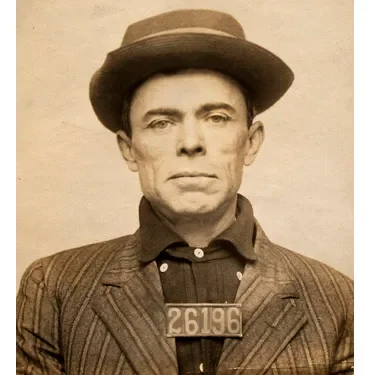
Burglar Jack Black was reading by candlelight in his dank dark cell in the early morning of April 18, 1906, when he felt the earth shake. He’d been two years in San Francisco’s Broadway county jail awaiting a hearing on appeal. He woke up his cellmate and then came another shock. By now the whole block was awake and guards were running this way and that, jailbirds were squawking. At the third shock Jack realized for sure that something serious was afoot. He was kind of excited; here was a change in routine that might break to his advantage.
The old Broadway jail in North Beach, built at the time of the forty-niners half a century ago, was a two-story structure and including a basement with a solid stone foundation so it didn’t much rock during the earthquake and it wasn’t destroyed in the rampant fires that followed either like so many buildings in the same neighborhood. (Today San Francisco’s Beat Museum stands in the exact location of this former county jail.) The rats knew a good thing when they found it; Jack said they practically took over the jail every night, coming up through the floors of cells from the sewers running below. Unlike the rats, though, the prisoners must’ve felt trapped inside while structures collapsed all around them; they could see ruination just across the street from their absurdly sturdy structure. Jack and his cellmate crouched under the arch of their cell door and listened to the rising panic. He noted an old-timer guard holding up his hands, shouting, “’Tis the curse of an angry god on a wicked city!” As ever Black is apt in delineating the philosophical correspondences between captives and their captors in close quarters.
In the event, more and more prisoners were brought into the jail while the inmates wondered what if anything would be done with them. A man who said he was a saloonkeeper was put into Jack’s cell, half hysterical. “Everything I have in the world is gone!” he said to Jack, and then he told the story of how he’d tried to get into his saloon and retrieve money from his safe but was arrested in the process. “The soldiers wouldn’t let me.” Other men were bayoneted or shot for the same offense. (It was three weeks before this man got his liberty, Jack reported.)
While the jail became crowded with suspect detainees and even child prisoners—mere freewheeling hooligans remanded by militia or overeager citizen lawmen who’d commandeered a weapon and played at enforcer—and as the city continued to burn the convicts hoped like hell the fire would approach close enough that their guards would have no choice but to let them all go.
*
The Frisco earthquake and its harrowing aftermath was the story of the year. Numerous histories and reportage were issued from that day to this—though none that I have read cared to make any mention of the condition and circumstances of the city’s incarcerated during the days-long disaster, mismanaged in so many respects in any case. Thanks to Black’s singular account (published some eight years later in the San Francisco Bulletin as part of a longer series of sketches of his incarceration), we know the authorities’ hold on prisoners amidst the crisis remained powerfully in place certainly as seen in the same aggressive light as the city’s chief military officer’s controversial order to arrest and detain, when not shooting to kill, any and all lawbreakers under any circumstance (this kill order was in fact officially imposed and martial law made publicly known within hours of the morning tremors, illegally so, it turned out). In fact, those put in positions of authority within the emergency—or those who’d taken authority upon themselves in the chaos—succeeded in this mission above all expectation. While the city burned and fell fully a sixth of the victims of the catastrophe (that is, some 500 victims) had been summarily executed by a myriad of law and order compliance and enforcement. Citizens being gunned down by overzealous soldiers in front of their homes, having attempted to enter again for any reason, for example, was not at all uncommon. Nor were haphazard but murderous vigilance committees, on the prowl under bellicose, panic-driven, self-made rule of law. For Jack Black and the other furtives and outcasts it was an overripe if predictable worst-case scenario when John Citizen has homemade law at his trigger finger.