


Maxwell Bodenheim’s Harlem Slang
Maxwell Bodenheim is no longer the cat’s pajamas. If he was once something of a cult figure in Chicago and, later, New York City’s Greenwich Village, he is no longer of much interest to any reader – except perhaps to some stray dissertation student or to some crime reporter dredging up the gruesome details surrounding his violent death. So much for the vicissitudes of poetic fame.
Back in 1931, however, when Bodenheim was coming into his own as a literary maverick, New York publisher Horace Liveright issued his novel – Naked on Roller Skates. The title is a grabber, but the book itself would be anathema to feminists since it features a heroine who wishes to be beaten and degraded:

When the Stars Began to Speak
“Did you ever hear a dream talking?” (line from an old song)
What was lost and what gained, crossing the great techno-divide between movie pantomime sometimes as stylized as ballet, and an initially stagey yackety yak? Film had been visual, fluid and rhythmic, with live music helping to transport audiences into The Bigger Than Life Beyond. The big deadweight soundproof box, containing both camera and asphyxiating operator, then fell on this dancing medium… flooring it. What would survive?

Ginger Rogers: Curse of the Working Class
A natural-born mimic, ham, tease, hard worker, stoic follower and out-of-reach babe, Ginger Rogers has proven one of the most difficult to define of all the 1930s Hollywood stars. At her best she was a synonym for fun and high spirits while also conveying a dignified and skeptical kind of resistance to other people, and these contradictory impulses made her one of the most special and ambiguous performers of her time. Rogers excelled in her first seven musicals with Fred Astaire and in several of her comedy vehicles and even in some of the programmers she churned out in the early 1930s. She was beloved, and rightly so.

FROM BROADWAY TO BOMBAY: Marty Reisman (1930-2012)
In the late 1990s I worked at a small used bookshop on Fourth Avenue. A lot of unusual printed matter passed through the stacks. One time a writer for the Village Voice sold us his book collection, which included a copy of The Money Player: The Confessions of America’s Greatest Table Tennis Champion and Hustler (1974), by Marty Reisman.

The Palestine Chronicle Case: When Truth Becomes the Crime
The Palestine Chronicle is not a militant organization. It is a modest, independent publication, sustained by small donations and animated by a singular mission: to bear witness. It tells the untold stories of Palestine, documenting dispossession, resistance, and the endurance of a people condemned to silence. In a media landscape dominated by powerful conglomerates repeating the language of governments, the Chronicle insists on a journalism of proximity — grounded in daily lives, in the rubble of Gaza, in voices otherwise erased. Its true offense, in the eyes of its detractors, is not invention but truth.
At the heart of this endeavor stands Ramzy Baroud. His career is the antithesis of clandestine. For decades he has written, taught, and spoken in public, producing books translated into multiple languages, contributing columns to international publications, addressing audiences in universities and public forums across continents. He is not a shadowy figure; he is a man whose work has been consistent, transparent, and intellectually rigorous. His life is not untouched by the tragedy he describes: many members of his family were killed under Israeli bombardments. Yet while mainstream media rushed to amplify unproven allegations against him, they remained deaf to his personal grief. His tragedy was ignored, his integrity overlooked, his voice distorted — because his engagement is unbearable to those who would prefer silence.
A Crime of Conscience, Not of Law
He is an engaged journalist in the noblest sense: independent, lucid, unflinching. His so-called crime is not collusion with violence but fidelity to memory. That is why he is demonized — not for what he has done in law, but for what he represents in conscience. America, unable to silence Palestinian voices through censorship alone, now instrumentalizes its justice system to achieve by indictment what it failed to achieve by argument. Having harassed universities, intimidated students, and punished professors for their solidarity with Gaza, it turns the courtroom into a new battlefield. And Congress, captive to the whims of its Zionist masters, joins the manhunt, targeting a journalist for the sole offense of telling the truth of his people. As for the mainstream press, it chooses cowardice: ignoring his family’s suffering, ignoring the emptiness of the charges, while echoing the accusations of power as if they were evidence.
Law Twisted into Weapon
The complaint filed against Ramzy Baroud and the organization (People Media Project) that runs the Palestine Chronicle rests on the Alien Tort Statute, grotesquely overstretched to criminalize editorial decisions rather than acts of war. It alleges that by publishing articles from Abdallah Aljamal — described by Israel as a Hamas operative killed during a hostage rescue — the Chronicle “aided and abetted” terrorism. But here lies the first fissure: this characterization of Aljamal comes exclusively from Israeli military sources, themselves a belligerent party. It has never been independently verified. The claim that he was both a journalist and a Hamas operative remains an allegation, not an established fact. To treat it as judicial evidence is to replace proof with propaganda.
Even if—hypothetically—Aljamal had, at the demand of a militant group, harbored hostages, such a circumstance would not in itself render him culpable: what ordinary civilian in a war zone can refuse the command of militants under threat of force? And even if it occurred, how could Ramzy Baroud have known of it? Even taken at face value, the allegation collapses upon scrutiny. No evidence demonstrates that the Chronicle or its editor had actual knowledge of Aljamal’s supposed operational role, nor that modest freelance payments — if any at all — bore any causal nexus to hostage-taking. The federal judge, in February 2025, dismissed the original complaint precisely for lack of proof of knowledge or intent. The plaintiffs returned with an amended filing, repackaged in rhetoric and pathos, but still devoid of the material elements required under international law: actus reus (a substantial contribution to the crime) and mens rea (intent or knowledge).

When Nature was Golden
Let’s open with a few passages of deathless prose from the classics.
EMORY’S SOFT-SHELLED TURTLE (18 in.; to 35 lb.) is the only Southwest member of an edible group with long necks and short tempers. Handle with care.
BELTED KINGFISHER Where there are fish there are Kingfishers, beating the air in irregular flight, diving into water with a splash and emerging with fish in their beaks.
THE EASTERN MOLEor common mole makes the mounds that dot your lawn. You are unlikely to see any moles, for they stay underground unless molested.
You saw them in the basement of your third-grade best friend, or in your school library. If you were lucky, you had one or two at home—your older sister read them first, years ago; maybe they’d even belonged to one of your parents. Paperback books just a bit smaller than pulp fiction novels, though equally thick, their illustrated pages of a glossier, higher quality. The typeface was Futura, that design marvel of yore, also seen in the old Hall of Dinosaurs in the American Museum of Natural History. Insects, Seashores, Mammals, Reptiles and Amphibians—which did you have? The Golden Guides gave us our natural world in all its glory, and managed to do it in a singular style, dry yet affectionate, concisely informative and never, ever dumbed-down. They were written for children, but each, too, is a cracking read for any adult eager to learn. Or to remember.
Naturalist Herbert S. Zim, who founded this series of guides and wrote many of them, was born in New York in 1909. Raised there and in Southern California, he finished his B.S., M.S., and Ph.D at Columbia University. He was then a science teacher for twenty-five years—at Ethical Culture schools in New York City, and later at the University of Illinois Urbana-Champaign. One wonders where on earth he found the time to crank out so many books. Each was a loving collaboration with other educators, not solely Zim’s effort. But the synthesis of these people, the meticulous research required to bring together all the info, was his responsibility, from 1949 until the early 1970s. Zim, in 1969, was also the editor of an 18-volume set of encyclopedias named Our Wonderful World.
Of the 84 Golden Guides, Zim wrote or co-wrote 24. Is it confirmation bias that makes me believe those are the best of the bunch? The simple style is charming, with phrases like Rock Ground Squirrels, found in the Southwest, are our largest terrestrial squirrels. What grace: with a hint of pride to be from the United States, he said that the squirrels are ours. (I also appreciate that he uses the word “unique” correctly, without qualifiers. The Barn Owl is unique, not “totally” or “somewhat” unique.) The occasional anachronism amuses. Once in awhile Zim tells us which kind of turtle or ground squirrel makes a good pet, if captured.

Zoot Suit Killers
On November 20 1942, a Brooklyn jury returned guilty verdicts on a pair of Williamsburg teens, 16-year-old Neil Simonelli and 18-year-old Joseph Annunziata, for the murder of Irwin Goodman, their math teacher at William J. Gaynor High School. The two of them had never much liked Goodman, a 36-year-old father of two. When he reported them to the principal for smoking in the boys’ room, they walked eight blocks to Simonelli’s home, where they picked up a pistol, then back to the school. They confronted Goodman and got into a scuffle with him. The gun, which Annunziata was holding, went off, perhaps accidentally, fatally shooting Goodman through the back. Because the jury entertained a doubt that the shooting was premeditated, they convicted the boys of murder in the second degree. The pair went off to Sing Sing together to begin sentences of 20 years to life. Had the verdict been first-degree murder, they could have been the youngest New Yorkers ever executed.
The Last Good Europeans
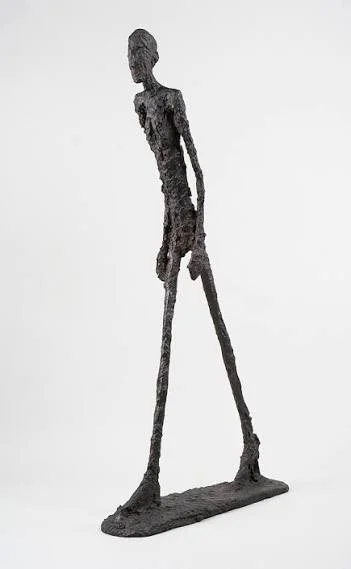
Muselmann is a term from the Holocaust. It was used by prisoners of the camps to describe their fellow inmates, those who were utterly emaciated and resigned to impending death. The word is Yiddish for Muslim, deriving from the old Turkish word, müslüman. In the camps, its use was varied and there are many opinions on its origin and application, most notably from Victor Frankel, Eugen Kogon, and Primo Levi (all of whom were Holocaust survivors). Here is Levi’s powerful description: “Their life is short, but their number is endless: they, the Muselmanner, the drowned form the backbone of the camp, an anonymous mass, continually renewed and always identical, of non men who march and labour in silence, the divine spark dead within them, already too empty to really suffer. One hesitates to call them living: one hesitates to call their death death, in the face of which they have no fear, as they are too tired to understand ...”

Deporting Dissent: The Dangerous Precedent Set by the Persecution of Pro-Palestine Activists
"Rights are granted to those who align with power," Mahmoud Khalil, a Columbia University graduate student, eloquently wrote from his cell. This poignant statement came soon after a judge ruled that the government had met the legal threshold to deport the young activist on the nebulous ground of "foreign policy".
"For the poor, for people of color, for those who resist injustice, rights are but words written on water," Khalil further lamented. The plight of this young man, whose sole transgression appears to be his participation in the nationwide mobilization to halt the Israeli genocide in Gaza, should terrify all Americans. This concern should extend even to those who are not inclined to join any political movement and possess no particular sympathy for - or detailed knowledge of - the extent of the Israeli atrocities in Gaza, or the United States' role in bankrolling this devastating conflict.

The Myth of Conquest: Why Gaza Will Never Be Subdued by Israel
To conquer a place is to fundamentally subdue its population. This must be clearly differentiated from 'occupation', a specific legal term that governs the relationship between a foreign "occupying power" and the occupied nation under international law, particularly the Fourth Geneva Convention.
When Israeli forces were ultimately compelled to redeploy from the Gaza Strip in 2005, a direct consequence of the persistent resistance of the Palestinian population there, the United Nations resolutely insisted that the Gaza Strip remained an occupied territory under international law.
This position stood in stark contradiction to that of Israel, which conveniently produced its own legal texts that designated Gaza a 'hostile entity' - thus, not an occupied territory.
Let us try to understand what appears to be a confusing logic:
Israel proved incapable of sustaining its military occupation of Gaza, which began in June 1967. The paramount reason for Israel's eventual redeployment was the enduring Palestinian Resistance, which rendered it impossible for Israel to normalize its military occupation and, crucially, to make it profitable – unlike the illegal settlements of East Jerusalem and the West Bank.
Between 1967 and the early 1970s, when Israel began investing in building illegal settlement blocks in the Strip, the Israeli military under the command of Ariel Sharon relentlessly strove to suppress Palestinians. He employed extreme violence, mass destruction, and ethnic cleansing tactics to subdue the Strip.

Guilty
It may be standard practice — the erotic thrill that Italian cinematographers bring to their experiments with light.
Yet the origin story of that light remains cloaked. Why should so many visual throwbacks, indeed an entire corpus of undead iconography, arrive willy-nilly to boggle the Mod eye? Amid Italy’s love affair with Fellini and its own sexy ebullience, an arch Gothic fountainhead rises up; and this otherwise sun-kissed, suggestive peninsula hungers for crooked headstones, images ripped from The Cabinet of Dr. Caligari under German light. The question arises, in my own mind, if nowhere else: mightn’t Italian Gothic Horror have originated in guilt?

Custom House Gossip: in the argot of now and then
Can we take a moment and compare the 2024 presidential election with the elections of the Gilded Age?
Not since the second administration of President Grover Cleveland, in 1892, has a candidate out for the stuff gained the opportunity to humblebrag nonconsecutive terms in the seat of Brother Jonathan. Old Cleveland was a chunky fellow, but right small potatoes when compared to the swelled head of the brandname monarch creeper, fairly elected in November, 2024. There’s no two ways about it: once the popular vote was in, and the convict clackbox was announced victorious, anyone in support of the Civil Rights Act was ready to absquatulate, while the dopes and note-shavers finally felt seen. Country jakes and bluebloods alike took a hard pass on goodwill for a taste of the fast boodle promised by the gasconading muttonhead. Liberals were out on their ear, and totally not heeled for another four years counting ties while the wheelhorse of the Grand Old Party lights up a D.C. dumpster fire the way red herrings torched Dolly and James Madison’s house in the War of 1812.