
Forget Uncle Bill: Brian Keith, 1954-1961
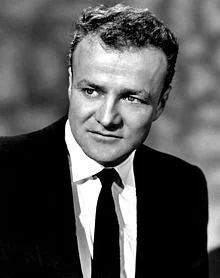
In the late 1960s and early ‘70s, the careers of several aging character actors were miraculously salvaged, thanks to a slew of tepid, excruciating (and therefore hugely popular) family-friendly television sitcoms. In some cases these unbearable shows were so popular they completely eclipsed the actor’s previous career in the ‘30s, ’40s or ’50s. So today more people know Fred MacMurray and William Demarest for My Three Sons instead of, say, Double Indemnity or all those Preston Sturges pictures. Likewise, Sebastian Cabot and Brian Keith will forever be remembered as the stars of the heartfelt and execrable Family Affair. Young as I was at the time and knowing nothing at all about him, Brian Keith in particular seemed wholly out of place and uncomfortable with the soft-serve shenanigans around him. He struck me as bored, distracted, maybe a little depressed, as if he had no idea why he was there or who these three monstrous, insufferable little brats were. The very idea of “acting” seemed alien to him.
Keith was a hulking, broad-shouldered man with curly blond hair and a square, beaten face. He was less reminiscent of your standard sitcom star than an aging football player or one of those enormous, semi-retarded orange tabby cats you see sometimes. He moved slowly, spoke his lines in a gruff half-mumble, half-growl, and his smile always seemed forced and false and sinister. It wasn’t until many years later, after catching up with his early film career that I finally understood.
Keith was raised in New Jersey, the latest addition to a minor acting dynasty, and made his screen debut at age three with his father in the 1924 silent Pied Piper Malone. As he got older, he did a lot of acting on stage and radio, then, after graduating from high school he enlisted in the Marines and was a tailgunner during WWII. Upon returning home, he continued working the East Coast stages for a few years before venturing out to Hollywood.
Following a smattering of uncredited film roles in the late ’40s and a few stints on television, in 1953 he was signed as a contract player at Paramount, and things got mighty interesting there for awhile.
Although he would concentrate primarily on television work (including becoming the first actor to play Mike Hammer in the Blake Edwards-directed 1954 TV movie Mickey Spillane’s Mike Hammer), over the second half of the decade he still found the time to appear in several intriguing pictures.
It was in that brief stretch between 1954 and 1961 that his true greatness became apparent, his subtlety and range, as he played equal number complex heroes and villains, lawyers and thugs and nutjobs, fishermen and cowboys and cops. He quickly became a top-billed B film fixture, co-starring with Edward G. Robinson, Bette Davis, Robert Ryan, Kim Novak, Jan Sterling, Timothy Carey, Maureen O’Hara and Strother Martin in noir films, melodramas, half-comedies, adventure pictures, message films and Westerns.
In Jerry Hopper’s 1954 crime adventure Alaska Seas, Keith plays Jm Kimmerly, a salmon fisherman and owner of a cannery along the Alaskan coast who’s organized the local fisherman to fight off a gang of illegal fish poachers. When his old ex-con buddy Robert Ryan shows up one day, the upstanding and faithful Kimmerly doesn’t hesitate to give him a job. Little does he realize that not only would they soon be battling for the affections of Jan Sterling, but that his old pal would also be pulling double duty with the poachers. There are more than a few hints of Clash By Night here, but without that overly self-conscious Odetts dialogue. Keith is splendid as the trusting sort who is at last forced to recognize his friend’s deeply treacherous nature. That Keith naturally just looked so much the part of a rugged Alaska fisherman (more so than Robert Ryan or that villainous Timothy Carey) only made things easier.
That same year’s Five Against the House presented more of a stretch, with Keith playing Brick, a returning Korean War vet and wisecracking law student. Phil Karlson’s picture, which co-starred Guy Madison, Kerwin Matthews, and Kim Novak (with William Conrad in a small supporting role) is a schizophrenic number. It begins as a high-spirited college romp, with a group of buddies on a road trip back to school after the summer break. They stop by a roadside casino in Reno and witness a failed heist attempt. But the spirits remain high, the zingers keep flying, and those wacky college hijinx ensue. Then it becomes a serious romantic melodrama. Then it becomes a crime picture as the boys decide to do the impossible and pull a casino heist themselves. Then it takes a dark turn. Despite the ensemble cast, Keith is the real standout here as it’s slowly revealed the war vet-turned-zany college student is not merely troubled, but profoundly insane. His ability to turn on a dime, from deadpan jokery to murderous rage in an instant is simply remarkable, and dramatically increases the film’s tension level, as you never can tell when it might happen next.
He found himself working with Karlson again on the following year’s Tight Spot, with Edward G. Robinson, Ginger Rogers, and that oily Lorne Greene. This time around he plays a young but already cynical cop who’s assigned to guard a mob kingpin’s sharp-tongued ex-moll (Rogers) in a claustrophobic hotel room. Meanwhile the DA (Robinson) tries to convince her to testify against Lorne Greene despite the fact that everyone else who’d agreed to do such a thing has been bumped off.
What begins as a standard witness protection movie (if more lighthearted thanks to Rogers’ endless wisecracks and a hilariously bad telethon on the TV) soon devolves into a romantic comedy as Rogers falls for Keith. But then it takes another turn when we learn Keith is on Lorne Greene’s payroll. Based on a play, it remains a very stagey and talky picture with mostly one-dimensional characters, but Keith once again is the standout here, a seemingly minor role at first that becomes the fulcrum around which the film’s final third turns.
He then co-starred with Bette Davis, Kim hunter, and Paul Kelly in writer/director Daniel Taradash ’s hamfisted but necessary anti-Red Scare melodrama Storm Center (1956). Davis, the librarian in a small provincial town, becomes the victim of a witch hunt when despite mountains of public and political pressure, she (being the adamant free-thinking sort) refuses to pull a book called The Communist Dream off the shelves. Keith keeps it low-key and humorless here as the young, ambitious member of the town council who spearheads the drive to destroy the librarian, though the focus is on the metaphorical vector of a 10 year old boy. Once a voracious reader who adored the librarian, see, the kid becomes a little madman after his lunkheaded bullneck of a father fills his head with hate and lies not only about the librarian, but about books in general.
A direct and undisguised response to the McCarthy Era and the prevailing stupid paranoia of the times, the mostly-forgotten film, as heavy handed and overbaked as it can be, remains an important little volley against mobthink, which may help explain why it’s so forgotten.
But Keith was never so terrifying, never exuded as much cool and deadly menace as he did in Jacques Tourneur’s 1957 noir standout Nightfall, based on the David Goodis novel. It’s a complex story, beautifully told through a mesh of present time and flashback, but for our purposes here let’s just say Keith plays a cold and sadistic bank robber who, together with his less cool and even more sadistic partner Red (Rudy Bond) pursues unassuming commercial artist Aldo Ray (who is also being pursued by insurance investigator James Gregory), in the hopes he’ll lead them to that $350,000 they took in on their last job, but have since misplaced. The whole cast here is stellar, but Keith, in a very low-key take on another psycho role, is magnetic.
Later that same year he once more stepped bak to the side of righteousness and goodness in the fairly standard Chicago Confidential. The generally undistinguished Sidney Salkow didn’t do much to change that reputation here, despite a cast that includes Elisha Cook, Jr., Beverly Garland, and the great Douglas Kennedy. In the lead, Keith is still fun to watch but strangely miscast as the serious, straight-arrow crusading district attorney out to clear an innocent man wrongly convicted of killing a union boss, while simultaneously trying to nab the mobsters behind it.
In another minor part-crime drama/part-message film also from ’57, Appointment With a Shadow, he plays a gruff detective staking out the most notorious crook in the city. At his sister’s urging, he reluctantly agrees to let her drunken, washed-up reporter of a boyfriend (George Nader) tag along, hoping if he can just stay sover for one day, just long enough to nab the biggest scoop of his career, he’d be right back on his feet again. Well, it ain’t exactly Lost Weekend, but few actors can pull off detectives of the gruff and world-weary variety quite like Keith.
Then in 1958 he was an arrogant but fearless cad of a freelance trucker in Violent Road, Howard Koch’s remake of the French adventure classic The Wages of Fear from five years earlier. Reluctant as he is, the president of a troubled rocket plant has little choice but to hire Mitch Barton (Keith) to do a little job. See, there was this little accident, and now the entire plant has to move to a new location a couple hundred miles away. They’re under a tight deadline, and part of that move involves three tanker trucks filled with highly unstable and explosive rocket fuel. No other trucking company would take the job because their insurance wouldn’t cover it. Asshole that he is, Barton, being a man with no insurance, is their only hope.
Oh, there is this one little thing, though. See, for silly legal reasons, even though the new site is a pretty simple quick jaunt down the highway, the only way for the tankers to get there is over an extremely narrow, twisty, and bumpy mountain pass. Oh, and the other little thing is, on account of the deadline on this big government contract, all three trucks have to show up at the same time or, y’know, you don’t get paid. And if you let those chemicals just sit like that too long?
Well, they might just go right ahead and explode anyway.
Like the fisherman in Alaska Seas, Keith perfectly embodies the rugged, self assured renegade trucker. Despite a laundry list of typical adventure film contrivances, an irksome and confusing framing device, a tiny budget and a mostly no-name cast, Koch’s picture remains a taut and memorably solid B film, and a fine addition to the Trucker Noir subgenre.
After appearing in Sam Peckinpah’s TV series a few years earlier, in 1961 Peckinpah again cast Keith to star in his first feature, The Deadly Companions. But then along came Disney’s light family comedy The parent Trap, in which he co-starred with Haley Mills and Haley Mills, and that was pretty much it.
Later telling interviewers he much preferred family friendly projects, he spent much of the next 30-plus years working in television, both as a series lead (Family Affair, The Brian Keith Show, Hardcastle and McCormick), and in an endless string of guest spots, usually playing uncles, colonels, or judges. Oh, there were a few interesting features dropped in here and there, like Huston’s Reflections in a Golden Eye with Brando and Elizabeth Taylor, a couple John Milius films, a couple Burt Reynolds vehicles, the all-star comedy The Russians are Coming! The Russians are Coming!, and the disastrous all-star disaster film Meteor, in which he spoke Russian exclusively—but there was never another run like the one he had in the late ’50s.
Then in 1997, after being diagnosed with emphysema and lung cancer, and still mourning the suicide of his oldest daughter, and after making his plans clear to several interviewers, he shot himself in the head.
Jim Knipfel