

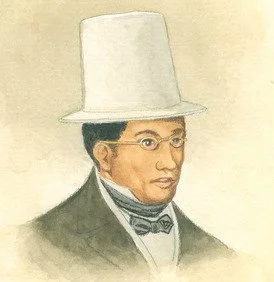
David Ruggles
In 1834 there were so many instances of urban mob violence – at least three dozen from New Orleans to Boston – that it was soon known as the Great Riot Year. One of the worst outbreaks was in New York that summer, when white hooligans, whipped into a frenzy by conservative newspapers like the Herald, ran amok in the streets for a week, attacking the homes, churches and businesses of black New Yorkers and white abolitionists.
On Lispenard Street in what’s now called Tribeca, a young man named David Ruggles ran an abolitionist bookshop. The 1834 rioters strangely left it unmolested. A year later, however, an arsonist burned it down. Given the tenor of the times, it seems inevitable – because Ruggles’ store was not only an abolitionist bookshop, but the first black-owned bookshop in the country.
Ruggles was a remarkable young man. He was born in 1810, the son of a blacksmith and a cook who’d been set free by their owner, Grover Cleveland’s great-grandfather. David grew up in Norwich, Connecticut, a Congregationalist town with a significant free black community who during his childhood had relatively good relations with whites. That would end with the backlash against abolitionists in the 1830s. He went to sea at fifteen, shuttling up and down the coast, and settled in New York City in 1827, the year slavery officially ended in New York State. At eighteen he opened a small corner grocery shop at Broadway and Cortlandt Street and ran ads in the black-owned newspaper Freedom’s Journal with lines line, “Sugars above mentioned are free sugars – they are manufactured by free people, not by slaves.” He embraced the temperance movement and stopped selling spirits, which set his store apart from many other grocery stores in the city that were actually just fronts for back room grog shops.
After a fire ruined the grocery store, Ruggles started his bookshop. Lispenard Street was near St. John’s Park, a spot he must have chosen with care. Recently carved out of the old Lispenard Meadows, it was in the 1830s a posh residential area for the city’s elite. It’s now a cheerless roundabout jammed at rush hour with Holland Tunnel traffic.
Among the works he displayed was a pamphlet collecting a few lectures and writings by another notable figure of the time, Maria Stewart. Born in Hartford around 1803, she’d been orphaned as a child and indentured to a preacher. What book learning she acquired came in Sunday school. In 1831 her first essay on abolition appeared as a pamphlet, Religion and the Pure Principles of Morality. She began giving public talks in 1832. Women didn’t do public speaking in the 1830s. The feminist author Fanny Wright had created a huge flap by doing so in 1828. Stewart is believed to be only the second woman in America to do it, made all the more controversial because she was black, speaking about abolition to mixed audiences of whites and blacks. In her second talk she exhorted black men to show more gumption in defense of their rights; they responded with angry shouts and tossed vegetables. Disheartened, she moved to New York City and apparently did no more public speaking, continuing her education and becoming a teacher instead.
After his bookshop was burned down in 1835, Ruggles opened a new one. He went on to help form the New York Committee of Vigilance, a group of black and white citizens who directly opposed “blackbirds” – bounty hunters who roamed the city trying to catch runaway slaves. Failing that, they would kidnap free blacks and ship them South into slavery, as happened to Solomon Northup, author of 12 Years a Slave. Ruggles risked serious reprisal publishing the names of known blackbirds operating in the city, and of New Yorkers, black and white, who assisted them.
In 1836 he fed the liberal Evening Post information that a Portuguese slave ship had docked in New York harbor. The captain, a well-known slaver named de Sousa, had about a dozen Africans on board and was slipping them off a few at a time to slavery in the South, unmolested by harbor authorities. The Post article led to de Sousa’s arrest. His case went to Judge Samuel Betts, who was notoriously unlikely to jail slavers; Betts set him free. Enraged, an armed black mob boarded de Sousa’s ship, which still held five Africans, and freed two of them at gunpoint. The specter of armed black men deeply disturbed white New Yorkers, who blamed Ruggles. One night some men tried to break into his home, claiming that they’d come to apprehend him as a fugitive slave. Constables arrived – and arrested Ruggles. He was quickly released, his already high esteem in the city’s black community greatly enhanced.
At the same time, Ruggles was a key figure in the city’s Underground Railroad. Slaves throughout the South came to know the name David Ruggles as the man to see if they could escape to New York. He put up hundreds in his home at the corner of Lispenard and Church Streets (still standing), while arranging for them to continue north to greater safety. In 1838 a young fugitive from Maryland, Frederick Bailey, made his way by train and ferry to lower Manhattan. He’d been told to find Ruggles, but the city so frightened and confused him that he spent his first night hiding on the dock, just a few blocks from Ruggles’ home. Ruggles found him there the next morning. Anna Murray, a free black woman from Baltimore with whom Bailey had fallen in love, joined him a few days later. They were married in Ruggles’ home by Reverend James Pennington, himself an escaped slave from Maryland. Ruggles gave the couple five dollars and sent them north to New Bedford, a safe haven known as “the Fugitives’ Gibraltar.” There Bailey gave himself a new name: Frederick Douglass.
Not long after that Ruggles’ health and eyesight began to fail. In 1842 the New England abolitionist Lydia Maria Childs arranged for him to move to a commune in Northampton, Massachusetts. He died in 1849, at the age of thirty-nine.
by John Strausbaugh
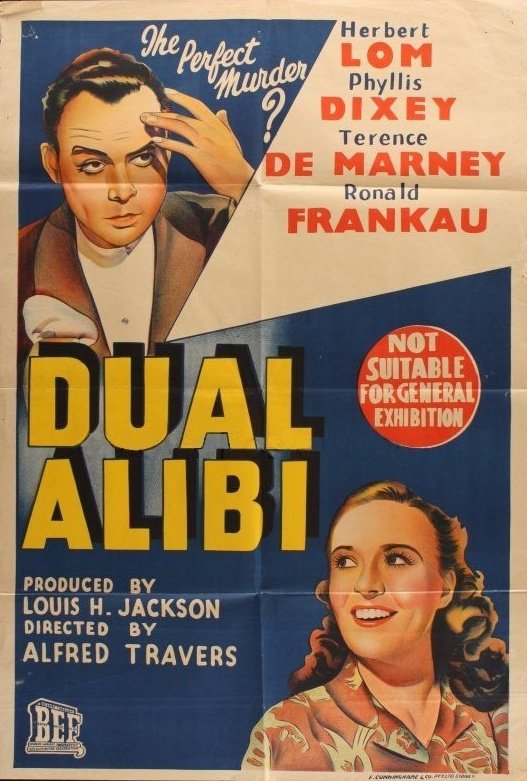
Cirque Sans Soleil
The circus is coming to town! But it’s raining, a bleak English downpour made the more depressing by the cheap, cramped movie studio this is all happening in. A British B picture, Dual Alibi, has just begun, and already 1947 audiences may have felt like bolting outside into the real rain. But wait! At least a few minutes…
Lined up in the rain like waiting prisoners at a mass execution are a throng of tramps, harnessed up in sandwich boards to promote the show. The circus owner inspects them, pronouncing them hideous (to their faces), the kind of thing that will positively repel potential attendees. The camera singles out a single, not-quite-dead-eyed survivor in the crowd as he rants. Then he has an idea – paint the tramps up as clowns to make them festive. A terrible idea, obviously, but still an idea, and the showman seems pleased with his brainstorm.
A tent. The army of the unemployed miserably daub themselves with greasepaint. The owner hovers over the figure seen earlier. He recognizes him! He knew him, years before! A great act, he was, or half of one. He frowns. “Which one are you?”
The tramp, afflicted with a consumptive death rattle of a cough, nevertheless laughs. “You never could tell us apart…”
And the laugh is a familiar thing too, bringing up inappropriate memories of the demented Chief Inspector Dreyfus tittering uncontrollably in the Pink Panther comedies. The actor is a very young Herbert Lom, born Herbert Charles Angelo Kuchacevich ze Schluderpacheru, pellucid skin on cut crystal cheekbones, eyes limpid and sardonic, purveying a weird, suave he-man androgyny with the Eastern European accent that portended, to British audiences of the time, both romantic sophistication and probable criminal intent. I knew at this point I should stop watching and just IMAGINE the rest of the film, but my curiosity overwhelmed my wisdom…
by David Cairns
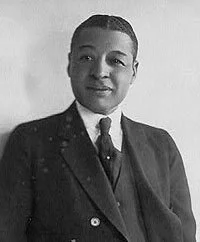
Nobody
“Nobody” was first sung 110 years ago, and it’s still one of the best American pop songs ever made. It’s been recorded numerous times by artists ranging from Nina Simone to Johnny Cash to the Four Lads to the Muppets. But nobody has ever sung “Nobody” quite as well as its co-writer, the great Broadway and vaudeville comedian Bert Williams.
Born in the Caribbean in 1875 to an Afro-Caribbean mother and an Afro-Dutch father, Williams moved to New York and then California with his family as a boy. He teamed up there with George Walker; they did blackface song and dance routines in minstrel shows, medicine shows and vaudeville, billing themselves as “The Two Real Coons.” Black performers were generally required to wear the blackface at the time. Some, like Williams, accepted it as part of the job; others, including Walker, hated it. As they developed their act, Walker, who was slight and graceful, became the natty, cakewalking dandy to Williams’ shuffling sadsack clown.
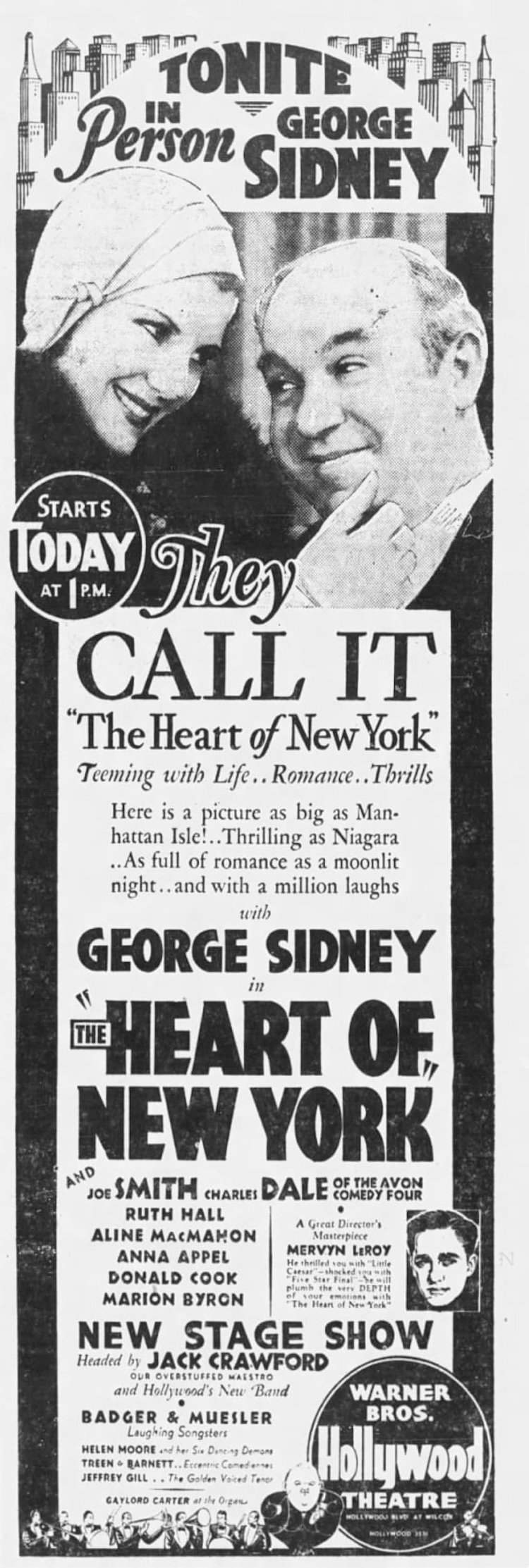
The Heart of New York
The Heart of New York, a 1932 Warner Bros. comedy about the Jewish Lower East Side, sometimes shows up on TCM. It’s worth a look. It was adapted from a play, Mendel, Inc., that had a successful run on Broadway in 1929 and 1930. Except for the pointedly deracinated title, the movie preserves the story’s essential Jewishness.
Playwright David Freedman grew up on the Lower East Side, where his father wrote for the Yiddish newspapers. As an adult David wrote poetry, gags for Eddie Cantor’s radio show, sketches for several Broadway musicals and revues, and a series of stories about a Lower East Side character, Mendel Marantz, that he compiled into his hit play. Piling success on success, Freedman moved off the Lower East Side to the magnificent Beresford apartment building on the Upper West Side. Sadly, he died of a heart attack there while still in his thirties.
Mendel Marantz’s story comes straight out of New York Yiddish theater, and takes place in an entirely Jewish universe. The characters all speak, act and gesture in ways immediately identifiable as Jewish to 1930s audiences, but they’re not caricatures or stereotypes, just exaggerated and broadly played for sympathetic laughs. Mendel is a poor plumber on the Lower East Side, a dreamer who’s always ducking the landlord. Because his wife Zelda makes him help with the dishes, lazy Mendel invents an automatic dishwasher. It make him suddenly, impossibly wealthy. Now he can afford to be truly lazy, paying other people to do all his chores for him – including hiring guys to play tennis and polo for him.
But in classic Yiddish theater mode, Mendel finds that instead of buying him happiness, his new wealth only causes problems. Zelda and the kids want to move uptown and live among the swells, but Mendel wants to stay on the Lower East Side. It’s his world, and he knows he’d never feel comfortable among the hoity-toity, mostly German Jews uptown. He buys their tenement building and fixes it up. The wife and kids kick him out, his partner in the dishwasher business tries to cheat him. It all comes out all right in the end, with everyone learning that love and family are more important than money – more basic Yiddish theater.
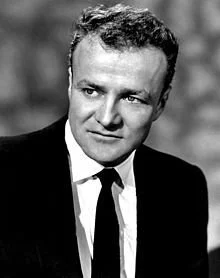
Forget Uncle Bill: Brian Keith, 1954-1961
In the late 1960s and early ‘70s, the careers of several aging character actors were miraculously salvaged, thanks to a slew of tepid, excruciating (and therefore hugely popular) family-friendly television sitcoms. In some cases these unbearable shows were so popular they completely eclipsed the actor’s previous career in the ‘30s, ’40s or ’50s. So today more people know Fred MacMurray and William Demarest for My Three Sons instead of, say, Double Indemnity or all those Preston Sturges pictures. Likewise, Sebastian Cabot and Brian Keith will forever be remembered as the stars of the heartfelt and execrable Family Affair. Young as I was at the time and knowing nothing at all about him, Brian Keith in particular seemed wholly out of place and uncomfortable with the soft-serve shenanigans around him. He struck me as bored, distracted, maybe a little depressed, as if he had no idea why he was there or who these three monstrous, insufferable little brats were. The very idea of “acting” seemed alien to him.
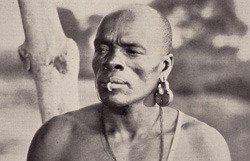
Trader Horn
In the 1930s and 1940s, legions of black Hollywood extras put on loincloths and bone jewelry to portray Africans in countless adventure pictures like the long-running Tarzan series. Their role was usually just to make the white actors look noble, brave, God-fearing and intelligent, in stark contrast to their own bestial, cowardly, and cannibal ways. If they were carrying the whites’ luggage, they were always ready to drop everything and run away at the slightest sign of trouble. If they were attacking the whites, they were ever prepared to give themselves up by the score to varieties of grisly deaths; no African adventure flick was complete without at least one black savage coming to an ignoble, screaming end in the jaws of a lion or crocodile, or under the foot of an elephant, or in the embrace of a python or in a pit of quicksand. These films were the inspiration for the then ubiquitous racial slur “spearchucker.”
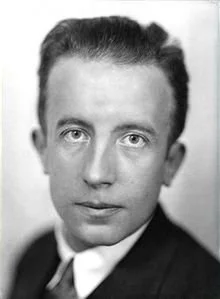
On the Proper Use of Dead Warriors
Since the war a new religion has been established, a religion that truly realizes a union sacrée among all men of the combatant nations, of which all the living are the austere priests, a religion more absurd and ugly than all the others: the religion of the dead.
And of what dead! Enslaved to all the bonds, all the commandments of a society founded on the basest of man’s realities; having proved their inability to disobey, having confirmed they were, when it comes to being heroes, nothing but death’s courtiers and the faithful servants of their masters. They had to be garbed in livery in order to fight. What hell did they not deserve? Cattle led to the slaughter are no more worthy of their horns than they were. Shame on all those soldiers who for so long lost the taste of freedom; shame on all those warriors watched over by gendarmes. And more than anything, shame on those who are dead, for they shall not be redeemed. All this blood spilled in the troughs now serves to recycle the worn out precepts of Christian and social morality. All this blood spilled for land and money is a violation of the security of the intelligence. Constrained and forced, some of them served the idea of the fatherland and others strengthened the sense of useless sacrifice. Some people portray the dead in three colors and others brandish them against the impudence of the living. The dead are there wherever you turn. Like god, they come in all flavors.
I assure you that this blood does not cry out for vengeance. Dead slaves remain slaves, nothingness.
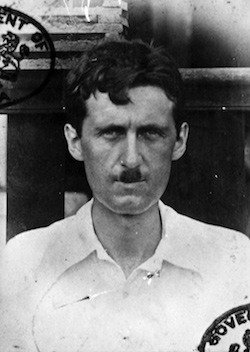
What Would Orwell Think?
In his “As I Please” Tribune column of February 4, 1944, George Orwell wrote: “The really frightening thing about totalitarianism is not that it commits ‘atrocities’ but that it attacks the concept of objective truth: it claims to control the past as well as the future."
The "atrocities” thing was a bit of as bugbear for him. A few months earlier he’d written: “So far as it goes, the distinction between an atrocity and an act of war is valid… Nevertheless, a world in which it is wrong to murder an individual citizen and right to drop a thousand tons of high explosive on a residential area does sometimes make me wonder whether this earth of ours is not a looney-bin made use of by some other planet.” In other words, he believed, correctly, that “war guilt” was in the eye of the victorious beholder.
Regarding the totalitarian attack on truth, I don’t know that this is the first seed of Nineteen Eighty-Four he planted in public, but he is clearly working out one of its core ideas.
D-Day was still a few months from execution in February 1944, but everyone in England could see the massive build-up to it. The tide had turned sufficiently against the Germans in Russia and the Mediterranean by then that the inevitable end was coming into view. That’s why Orwell could go on to write: “There is some hope, therefore, that the liberal habit of mind, which thinks of truth as something outside yourself, something to be discovered, and not as something you can make up as you go along, will survive.” My emphasis.
That’s an odd note of optimism from Orwell. It makes me wonder: if he’d been able to look ahead thirty-odd years past 1984, what would he think now?
by John Strausbaugh
WANTED MAN: On “The Fugitive”
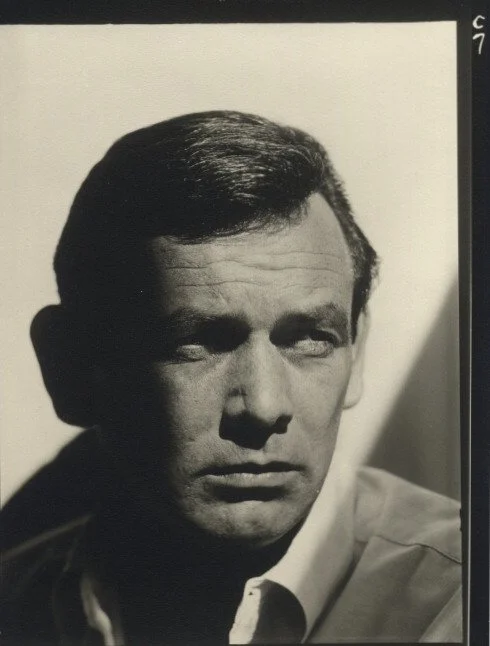
The road at night is home to one of America’s perennially romantic figures: the man who’s on the lam. The escaping slave wading in the water to throw off the dogs; the western outlaw with his face on a Wanted poster and a price on his head; the Depression-era bank robber gunning his stolen V-8 toward the state line. Guilt or innocence is almost incidental; it’s the race to stay free, and the need to keep on the move, that lend such dark luster to the fugitive. The double meaning of “wanted man” is inherent, never stated more succinctly than in Nightfall (1957), when just before they kiss Anne Bancroft tells Aldo Ray, who is pursued by both cops and criminals, “You’re the most wanted man I know.”
Ernie Kovacs in Philadelphia (1950-1952)
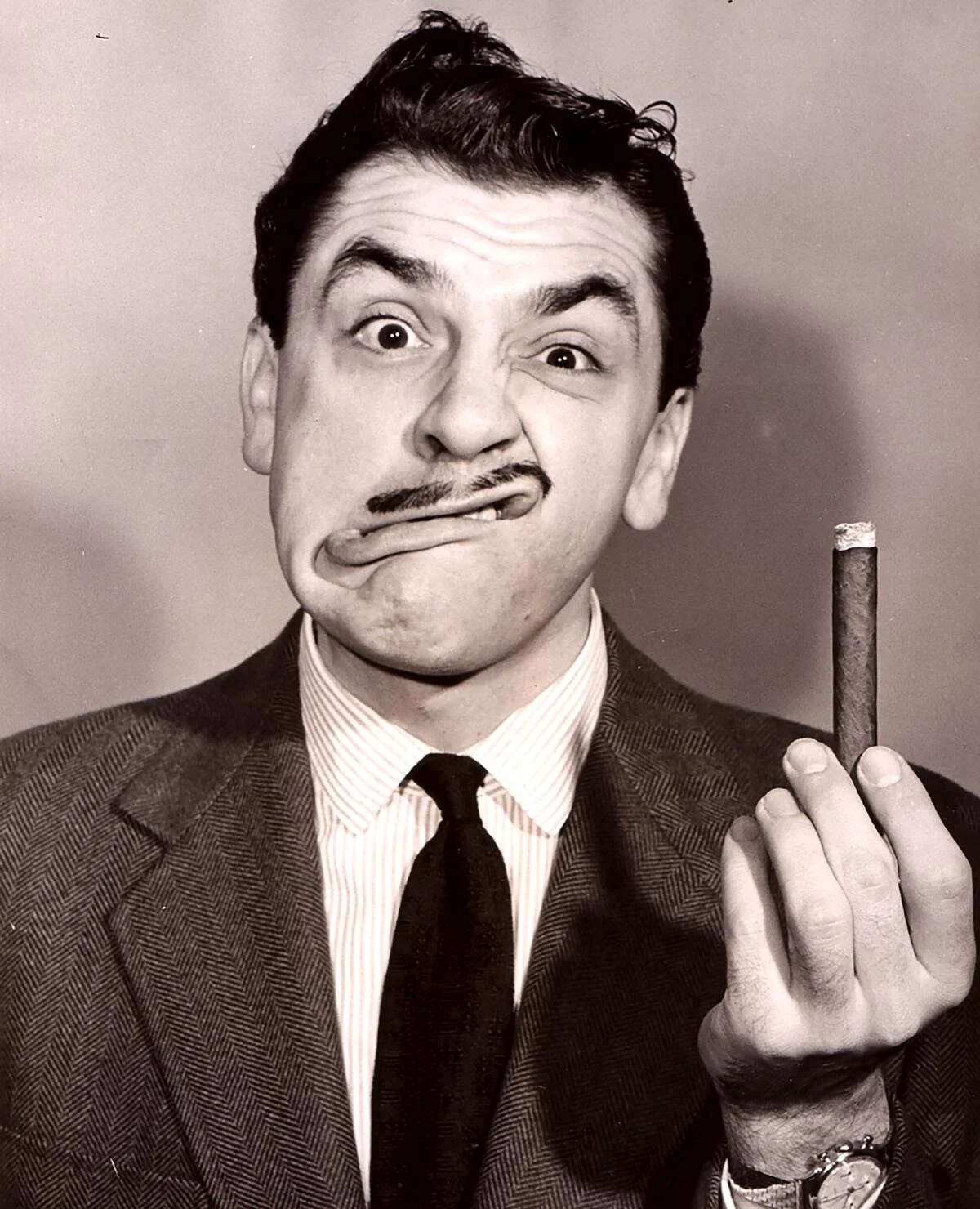
Among his countless other achievements as host of The Tonight Show, Steve Allen is credited with introducing radical innovations to the standard talk show mix like comedy sketches, interacting with the crew and audience, taking the camera outside the studio, and interviewing common people on the street—all things that went on to become standard for the form. Well, good for him, I say. He was a very smart and creative fellow.
Unfortunately for the sake of the accepted history, Allen didn’t start hosting The Tonight Show until 1953, a year after Ernie Kovacs was already doing all those things (and much, much more) on his show at New York’s WCBS, and two years after he first introduced them as a regular part of his local morning show in Philadelphia.
Kovacs was raised in Trenton, NJ, the son of Hungarian immigrants. His father was a cop turned bootlegger and saloon- keeper who made much more money as a bootlegger than he had as a cop, and moved the family into a lavish 20-room mansion. With the end of Prohibition, the family’s wealth deteriorated quickly, the houses got smaller again, and his parents split.
Jim
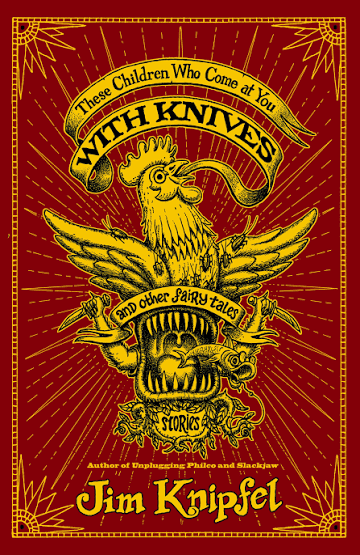
It’s weird to sit down and write about somebody but the only one I really want to read it is the person I’m writing about. And he just isn’t available.
A bit of context. We’ll go back a ways, forty years and a bit, 1986, probably late spring. I got a call from Toni at the front desk of the Welcomat in Philly that somebody was asking about writing for us.
The Welco was an “alternative weekly” that was more actually alternative, really its own thing, more the kind of freelance essay collection that might have come out of Weimar Germany in the 1920s. I was arts editor, working under Dan Rottenberg, who had conceived this fairly unique beast. I was looking for writers, yes, but those who had presented themselves up those stairs for the most part shouldn’t have.
Our wee editorial staff was on the third floor of a skinny row house on the 1900 block of Ludlow Street. Up the stairs that emptied away from me appeared a black fedora. A hand swung around the stair post and facing me was a guy of youngish but indeterminate age, attired in a long black coat, black pants, and that black hat that covered dark hair. His face was long, sharp, and … imposed upon?
Smallpox Goes to the Movies
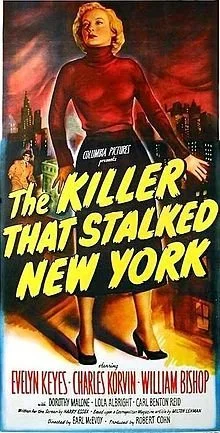
Beginning with The Andromeda Strain in 1971, disease movies quickly established themselves as a commonplace cinematic subgenre, usually with sci-fi overtones. So in the years that followed we got the likes of Outbreak, Contagion, Virus, The Stand, 12 Monkeys, The Crazies, 28 Days Later, most post-Night of the Living Dead zombie movies, The Omega Man, Winds of Terror, and dozens of others.